


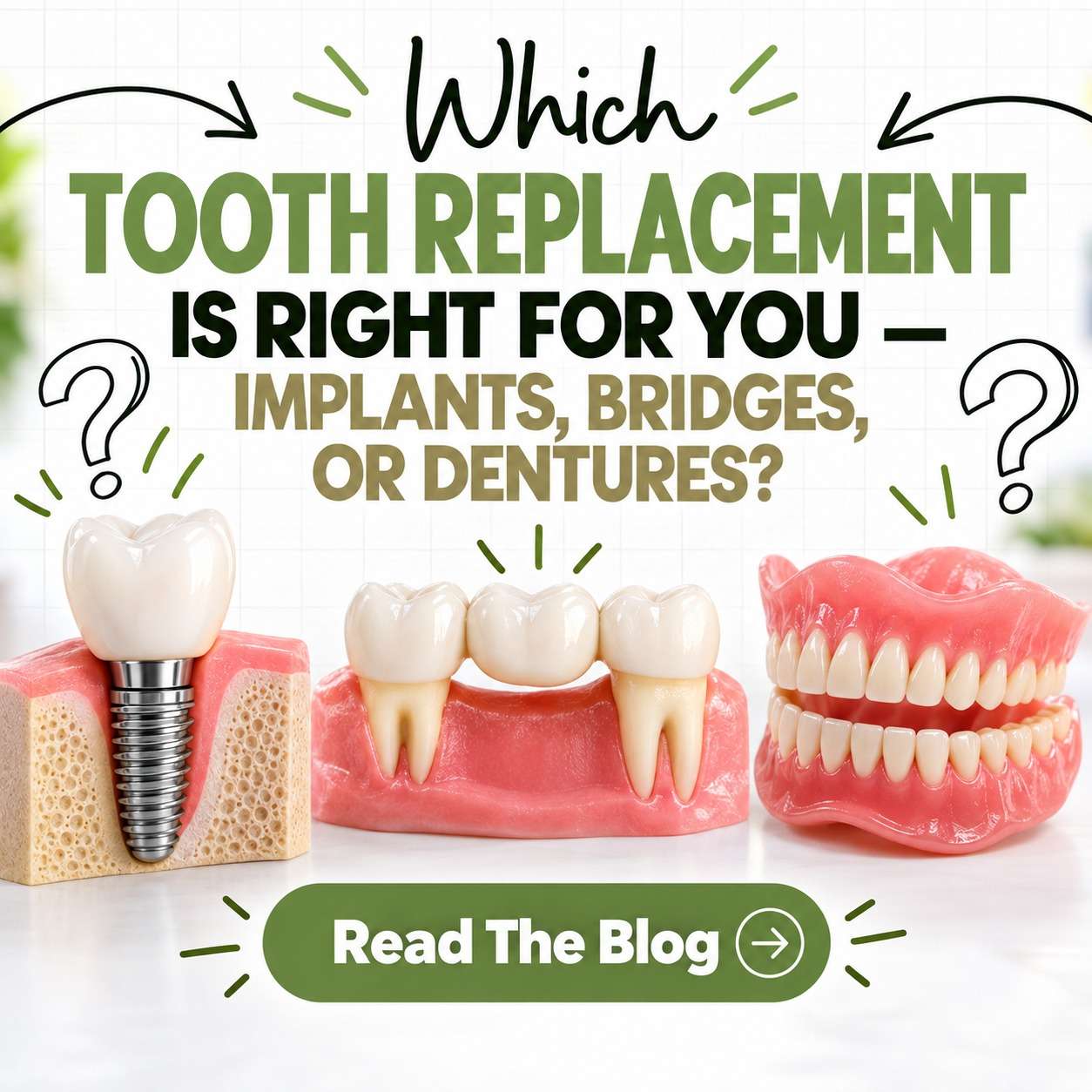
Missing a tooth can leave you with a surprisingly big question: what should replace it? If you’ve lost one or more teeth, you’ve probably already come across three common solutions: dental implants, dental bridges, and partial dentures.
But which one is right for you? The answer isn’t simply “choose the most expensive option” or “choose the option your friend has.” Your smile, oral health, bone structure, remaining teeth, lifestyle, budget, and long-term goals all factor into the decision.
Whether you’re exploring dental implants in Houston, comparing bridges and dentures in Dallas or Austin, or just starting to research your options anywhere in Texas, this guide breaks down the differences so you can walk into your next dental appointment informed — not overwhelmed.
Why Replace a Missing Tooth in the First Place?
A missing tooth isn’t only a cosmetic concern. Depending on where the tooth is missing, the gap can affect chewing, speaking, and your bite. Remaining teeth can also drift into the open space over time, which may create additional problems down the road.
Replacing missing teeth helps restore both function and confidence when you smile. The good news: you have options, and understanding them is the first step toward the right decision.
Option 1: Dental Implants — The Closest Thing to a Natural Tooth
Think of a dental implant as a replacement for the root of a missing tooth.
An implant is placed into the jawbone and can support a crown — the visible part that looks and functions like a natural tooth. As the area heals, the bone can fuse with the implant, creating a stable, long-term foundation.
Implants may be a good fit if you:
- Are missing one or more teeth
- Have adequate jawbone, or are open to bone grafting if needed
- Have healthy gums and suitable remaining teeth
- Want a fixed replacement rather than a removable one
- Are prepared for a treatment timeline that may span several months
Implants can also be used to anchor bridges or removable dentures in certain cases, giving them more stability than they’d otherwise have.
The trade-off: implant treatment involves surgery and a healing period, and may require additional procedures depending on your bone and gum health. Implants can be an excellent option — but they aren’t automatically the right one for every patient.
Option 2: Dental Bridges — Close the Gap Without a Removable Appliance
A dental bridge “bridges” the space left by one or more missing teeth. A traditional fixed bridge is supported by the neighboring natural teeth, while an implant-supported bridge is anchored by dental implants instead.
A dental bridge may be worth considering if you:
- Want a fixed (non-removable) replacement
- Have healthy teeth on either side of the gap that can support the restoration
- Prefer to avoid implant surgery
- Have a gap that’s well-suited to bridge treatment
For many patients, a bridge is a practical way to restore a missing tooth without surgery.
The trade-off: traditional bridges depend on the strength of the supporting teeth. Your dentist will need to evaluate whether those teeth are healthy enough to carry the extra load before recommending this option.
Option 3: Partial Dentures — A Flexible, Removable Solution
A partial denture replaces several missing teeth with a removable appliance, often held in place with a metal framework, clasps, or other connectors.
Partial dentures are often considered when:
- Several teeth are missing
- A fixed bridge isn’t a good fit
- You’d prefer a removable option
- You want to avoid placing individual implants for each missing tooth
One major advantage is flexibility — you can remove the appliance for cleaning and follow your dentist’s guidance on when to wear it.
The trade-off: a partial denture isn’t permanently fixed in your mouth, and it can take time to adjust to the feel of it while speaking and eating. Some follow-up adjustments are common as you adapt.
There isn’t one universal winner. The best choice is the one that fits your mouth — not someone else’s.
So, How Do You Actually Choose?
This is where a dentist’s evaluation becomes essential — not a chart, not a Google search, and not a recommendation from a friend whose situation may be completely different from yours.
1. How many teeth are missing?
Replacing one tooth is a very different situation from replacing several. A single gap might be treated with an implant and crown, or a bridge. Multiple missing teeth could be addressed with a bridge, a partial denture, an implant-supported restoration, or a combination approach — depending on their number and location.
2. What condition are your remaining teeth in?
This is one of the biggest deciding factors. If you’re considering a traditional bridge, the neighboring teeth need to be strong enough to support it. If those teeth are weak or damaged, your dentist may steer you toward an alternative. Healthy supporting teeth open up more treatment options.
3. How healthy are your gums?
Gum health matters for all three options, but it’s especially important for implants, since healthy tissue supports proper healing and long-term stability. If gum disease is present, treating it typically becomes part of the overall plan before moving forward.
4. Do you have enough bone for an implant?
Implants need a solid foundation in the jawbone. If a tooth has been missing for a while, the bone in that area may have changed shape or density. That doesn’t rule out implants — it just means your dentist may recommend a bone graft as part of the process.
5. Do you want something fixed or removable?
This question alone can simplify the decision considerably. If you strongly prefer something that stays in place permanently, implants or a fixed bridge are worth discussing. If you’d rather have something you can remove for cleaning, a partial denture may make more sense. Neither preference is right or wrong — your comfort and lifestyle matter.
6. How quickly do you want treatment completed?
Implant treatment typically involves a surgical placement followed by a healing period before the final restoration is attached — timelines vary by patient. Bridges and partial dentures often follow a different, sometimes shorter, schedule. If you have a wedding, vacation, or big event coming up, mention it — your timeline can influence which options are realistic.
7. What’s your budget?
Cost matters, but don’t compare options by sticker price alone. Factor in the initial treatment, ongoing maintenance, potential future adjustments or repairs, and expected longevity of each option. Dental insurance coverage also varies significantly by plan and provider. Ask your dental office for a written treatment estimate, and confirm what your insurance covers before starting treatment.
A quick note on cost: implants often carry a higher upfront cost than bridges or dentures but may offer greater longevity; bridges and partials can cost less initially but may need replacement or adjustment sooner. A written estimate from your dentist — factoring in your specific case — is far more useful than any general price you’ll find online.
What About Appearance?
Modern restorations can be designed to look remarkably natural, but the final result depends on several factors: the location of the missing tooth, the materials used, your gum tissue, and the skill involved in designing and fitting the restoration.
If appearance is a top priority for you, say so. Bring photos of smiles you like — a clear conversation about your expectations helps your dental team deliver the result you’re picturing.
What About Eating and Speaking?
Restoring everyday function is one of the most important reasons to replace a missing tooth. Gaps can make chewing certain foods difficult, and tooth loss can sometimes affect speech.
Expect a short adjustment period with any new restoration. Partial dentures in particular may feel unfamiliar at first — most patients need some time to get comfortable inserting, removing, speaking, and eating with one. Your dentist can walk you through what to expect for your specific treatment.
There’s No Universal “Best” Tooth Replacement
An implant might be an excellent choice for one patient and not the right fit for another. A bridge might be ideal for someone with strong supporting teeth. A partial denture might make the most sense for someone replacing several teeth who wants a removable option.
Your dentist should weigh your:
- Oral and gum health
- Bone condition
- Number and location of missing teeth
- Condition of remaining teeth
- Bite alignment
- Medical history
- Lifestyle and preferences
- Budget
- Cosmetic goals
That’s why an in-person examination beats any online comparison chart — including this one.
Questions to Ask Your Dentist
Which replacement option do you recommend for me, and why?
This should be based on your specific anatomy and health — not a one-size-fits-all answer.
What are my alternatives?
Understanding every option helps you make a confident, informed decision.
Will I need a bone graft or other preliminary procedure?
This affects both your timeline and overall treatment plan.
How will this affect my existing teeth?
Especially relevant for bridges, which rely on neighboring teeth for support.
How long will treatment take, start to finish?
Useful for planning around work, travel, or upcoming events.
What maintenance will this option require afterward?
Every option — implants, bridges, and dentures — requires some form of ongoing care.
What happens if I choose not to replace the missing tooth?
Understanding the risks of doing nothing is part of making a fully informed choice.
Don’t Choose Based on a Facebook Ad
You’ve probably seen the promises: “Same-day teeth!” “Permanent teeth!” “Lowest prices!” “Best implants in Texas!”, Marketing can point you toward a provider, but your mouth is unique, and a treatment that works beautifully for one person may not be appropriate for you.
Instead of asking “which option is cheapest?” or “which option is the most advanced?” — ask:
“Which option is appropriate for my oral health and long-term goals?” That’s the question that actually matters.
Your Smile Deserves a Personalized Plan
If you’re missing one or more teeth, you don’t have to figure this out alone. Dental implants, bridges, and partial dentures can each play an important role in restoring a healthy, functional smile. The right choice depends on your individual anatomy, oral health, preferences, and goals — not a generic recommendation.
The first step isn’t choosing an implant, bridge, or partial denture. The first step is getting an evaluation. Once your dentist understands your situation, you can compare your real options with confidence and choose a plan built specifically for your smile.
Missing a tooth? Start with a conversation, not a guess.
Schedule a free dental evaluation today with ToothHQ Dental Specialists | DFW Metroplex and find out which tooth-replacement options make sense for your oral health, budget, and goals.


