


Texas Brisket Test
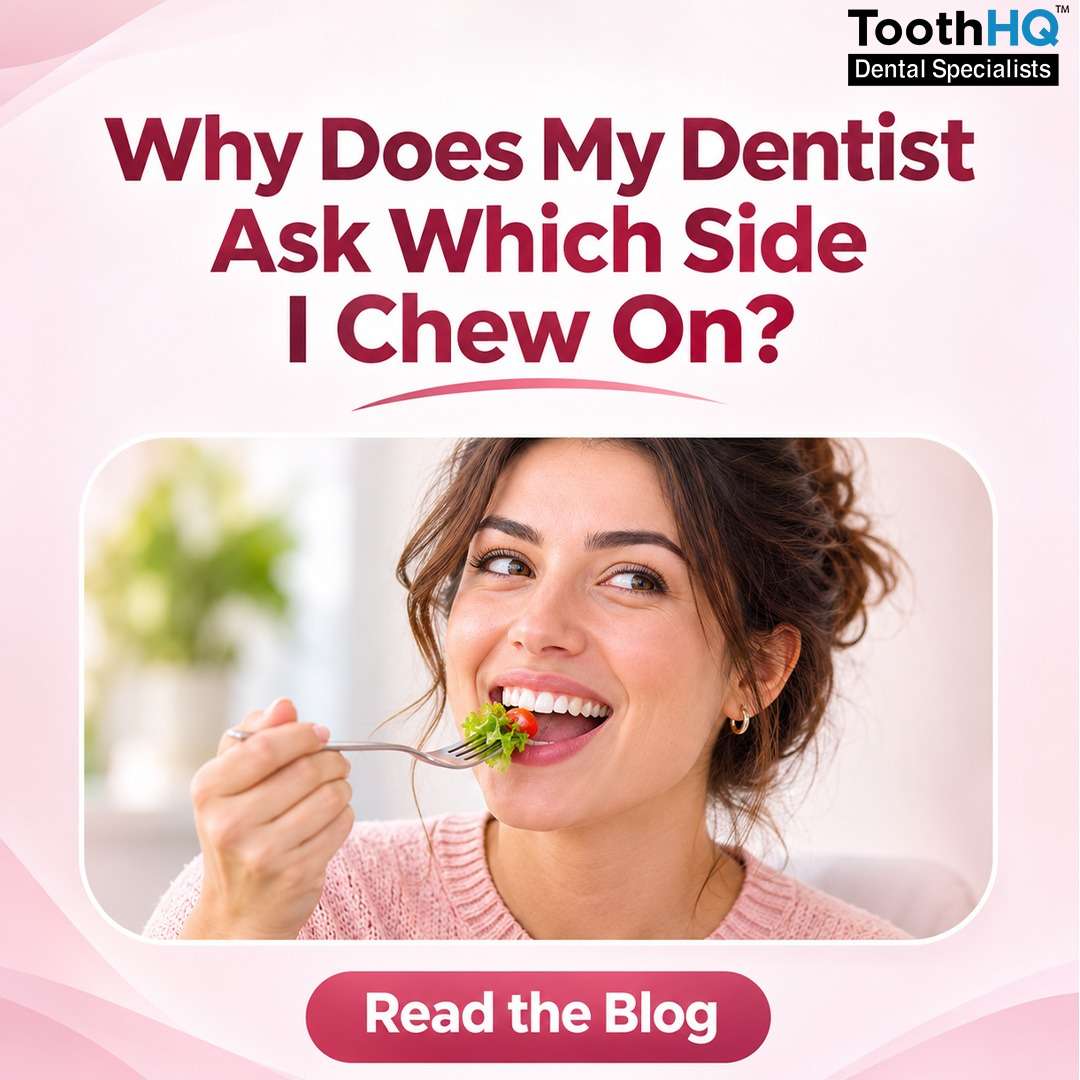
Here’s a quick experiment. The next time you bite into a Texas brisket sandwich, a kolache, or a chicken-fried steak, notice which side of your mouth takes over. Left or right?
Most people have an answer, and most have never thought about it. I notice it every day. When I examine a patient in Carrollton or Grapevine, the mouth often tells me which side does the heavy lifting, and sometimes the story behind it. (This is a pattern from many patients, not one case.)
So is chewing on one side bad for you? Sometimes it’s harmless. Sometimes it’s a clue worth following. Here is how I think about it.
Is It Normal to Have a Favorite Chewing Side?
Yes. Many people naturally favor one side, a bit like being left- or right-handed. A mild preference with no pain, no wear, and healthy gums on both sides usually isn’t a concern.
What gets my attention is when the preference is new, strong, or comes with a reason, such as pain, sensitivity, or a tooth that feels off. In that case your mouth may be steering you away from something.
Why People Chew on One Side
These are the reasons I hear most often:
Something hurts on the other side – A cavity, a cracked tooth, a sore gum, or a sensitive root can make one side uncomfortable. People adjust without noticing, and they only realize it when someone points it out.
A missing or loose tooth – When a tooth is missing, the opposite side often takes over. A loose tooth, a failing filling, or an ill-fitting crown can have the same effect.
Wisdom teeth – Impacted or partially erupted wisdom teeth can make one side tender. This comes up often in our teenage and young adult patients, and we see patients 15 and older.
Bite and jaw issues – If your teeth don’t meet evenly, your jaw may steer you to the side where they fit better. Some patients also notice clicking, tightness, or fatigue in the jaw on one side.
Plain old habit – Sometimes there’s no problem at all. It’s just a habit built over years.
What One-Sided Chewing Can Do Over Time
When one side always does the work, the mouth tends to show it. Here are the patterns I look for. They vary a lot from person to person, so none of these proves a cause on its own.
- Uneven wear. The busy side can show more flattened or chipped teeth.
- More plaque on the quiet side. Chewing helps keep teeth clean, so the neglected side often collects more plaque and tartar, which can lead to inflamed, bleeding gums.
- Gum recession on the overworked side. Heavy use combined with heavy brushing can contribute to exposed roots and sensitivity.
- Jaw fatigue. Some people notice soreness or tightness on the side they favor, or on the other.
This is also why a favorite chewing side can connect to other habits. If you read my earlier post on left- versus right-handed brushing, you’ll recognize the theme: we tend to clean and use one side more than the other.
What Makes DFW Chewing Habits Interesting
Texas food is chewy, crunchy, and sometimes tough on teeth. A few local favorites come to mind:
- Brisket, ribs, and steak. Tough textures reward strong chewing, and sore teeth make people shift sides quickly.
- Tex-Mex and tailgate snacks. Chips, tortillas, and nuts can chip a weak tooth.
- State Fair fare and game-day food. Whether it’s corn dogs in Dallas or a tailgate in Arlington, big bites tend to land on the side that feels safest.
- Ice. Plenty of North Texans chew ice to beat the heat, and it’s hard on enamel and fillings.
Our patients come from Carrollton, Grapevine, Cedar Hill, and Dallas, as well as Euless, Arlington, Grand Prairie, Frisco, and Plano, so I’ve heard “I just stopped chewing on that side” in every one of those communities.
When It’s Worth Getting Checked
Chewing on one side deserves a closer look if you notice any of the following:
- Pain, sensitivity, or a tooth that feels loose
- Bleeding or swollen gums on one side
- A cracked, chipped, or worn tooth
- A missing tooth you’ve been working around
- Clicking, popping, or soreness in your jaw
- A recent change in how your bite feels
If none of these applies and both sides are healthy, you probably don’t need to worry.
How We Help When There’s a Problem
Treatment depends on the cause. Gum inflammation on the neglected side may call for a deep cleaning (scaling and root planing). Recession may be a candidate for gum grafting. A missing tooth that has forced your chewing to shift may be replaced with a dental implant, which can restore more balanced chewing. Wisdom teeth causing one-sided discomfort may need to be evaluated for removal. The right option depends on your exam, and the earlier we look, the simpler the choices tend to be.
Simple Things You Can Do Today
You don’t have to retrain your jaw. A few easy steps help:
Do the brisket test – Pay attention to which side you favor at your next meal. If you notice a strong preference, ask yourself why.
Brush and floss both sides equally – Start on the side you tend to neglect. If the quiet side gets less natural cleaning, it needs more attention from you.
Don’t just work around pain – If you’ve been avoiding a side for more than a couple of weeks, have it looked at rather than adapting.
Skip the ice – Chewing ice can crack teeth and damage fillings. Try crushed ice or a straw instead.
Mention it at your checkup – Tell your dental team which side you favor. It’s useful information, and it can lead us to the real cause.
Frequently Asked Questions
Is it bad to chew on only one side?
Not always. A mild habit with healthy teeth and gums may be harmless. But one-sided chewing can lead to uneven wear, more plaque on the unused side, and jaw fatigue, and it can signal a problem on the other side.
Why do I only chew on one side?
Common reasons include tooth pain or sensitivity, a missing or loose tooth, wisdom teeth, bite or jaw issues, and long-standing habit. A dental exam can help sort out which applies to you.
Can chewing on one side cause gum problems?
It can contribute. The side that gets less chewing action often collects more plaque, which can lead to gum inflammation. Heavy use on the other side, combined with hard brushing, may contribute to gum recession.
Can chewing on one side cause jaw pain?
For some people it can contribute to jaw fatigue or soreness, though jaw pain has many possible causes. If you have ongoing pain, clicking, or limited opening, have it evaluated.
How do I stop chewing on one side?
First find out why you do it. If a tooth, gum, or bite problem is behind it, treating that usually makes balanced chewing feel natural again. If it’s only a habit, practicing chewing on both sides can help.
Your favorite chewing side is probably not a problem, but it can be a useful clue. If it comes with pain, bleeding gums, or a tooth you’ve been avoiding, your mouth may be trying to tell you something.
If you’re in Carrollton, Grapevine, Cedar Hill, Dallas, Euless, Arlington, Grand Prairie, Frisco, or Plano and you’ve noticed one side doing all the work, we’d be glad to take a look. You can learn more or request an appointment at mytoothhq.com/
Coming Up Next: 🦷 Brush Before or After Your Morning Coffee?
It’s the first decision of the day for half of North Texas: grab the coffee, or grab the toothbrush? One habit can leave your teeth feeling fresh, and the other can quietly work against your enamel. In my next post, I’ll explain what’s really happening in your mouth at that first sip and how to get the order right.


