


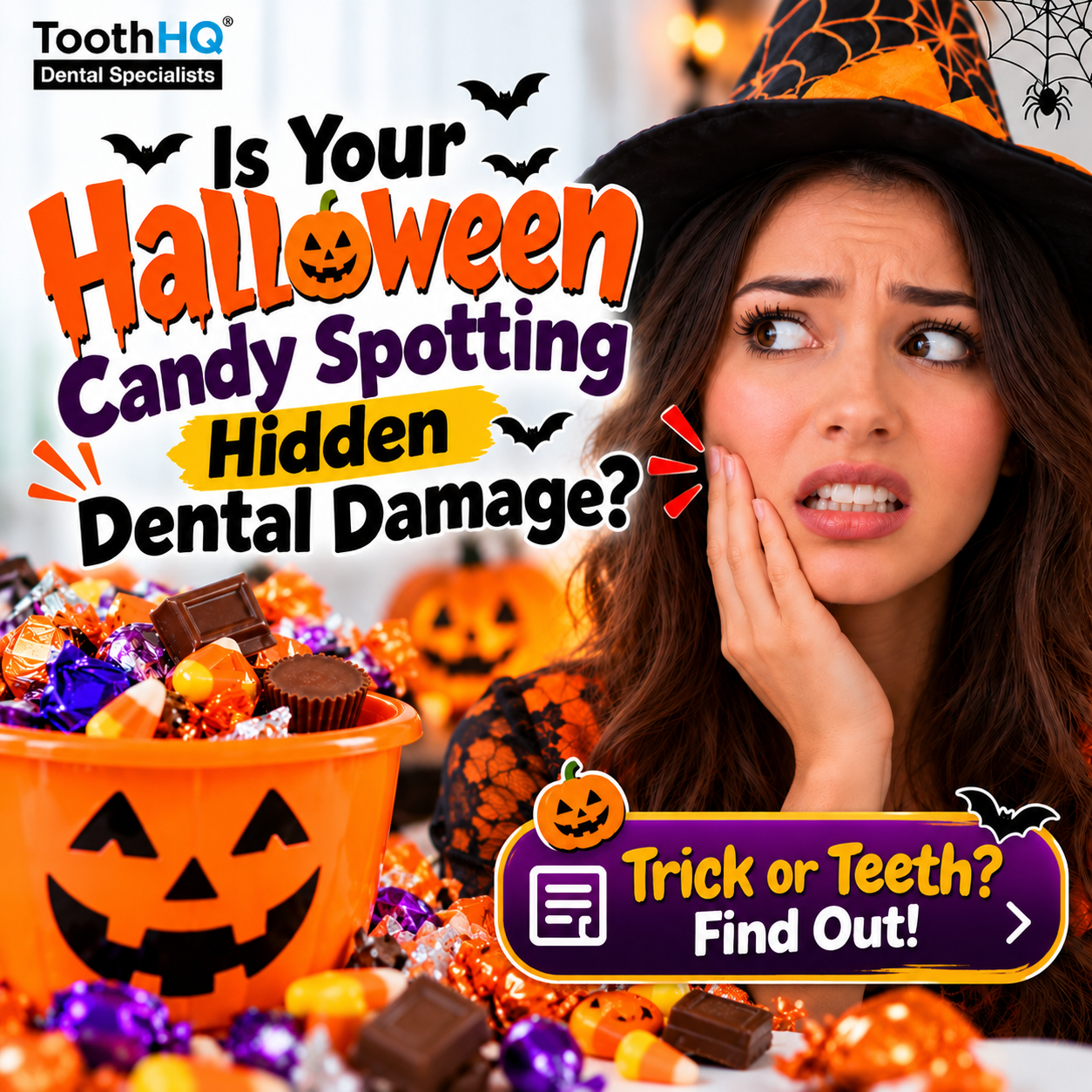
Every year, like clockwork, the Monday after Halloween arrives in our Dallas–Fort Worth dental office, and the phone starts ringing off the hook.
Our front desk team knows the drill before they even pick up:
- “I bit into a fun-sized Caramel Apple Pop and my crown came right off.”
- “My kid was chewing on a gummy worm and now their back tooth hurts whenever they bite down.”
- “I was eating movie-theater popcorn watching horror films and I think I cracked something in the back.”
As a dental specialist, I’m going to tell you a little secret about the post-Halloween rush: The candy almost never causes the underlying problem. It just exposes it.
Halloween treats act like a stress test for your mouth. That sticky caramel or hard toffee didn’t magically create a brand-new cavity overnight; it simply spotted an old, ignored issue that was quietly lurking under the surface.
Here is what is actually happening when Halloween sweets trigger dental pain, and why catching these issues now is the best move for your health—and your wallet.
The “Sticky & Hard” Stress Test: How Halloween Spots Dental Damage
Teeth are incredibly tough, but over time, daily wear and tear, micro-cracks, and old dental work create subtle vulnerabilities. You might go months without noticing anything wrong—until Halloween candy enters the picture.
1. The Pulling Power of Sticky Candies
Taffy, caramels, gummies, and dried fruit are notorious for creating immense suction. If you have an aging filling, a loose crown, or a weakened restoration, sticky treats act like a suction cup, levering the dental work right out of your tooth.
2. The Impact Force of Hard Candies
Jawbreakers, brittle, and unpopped popcorn kernels apply concentrated pressure on very small points of your enamel. If a tooth already has a microscopic fracture or an undetected internal cavity, biting down hard can split the tooth wide open.
3. The Acid & Sugar Spike
Sugary treats combined with acidic flavorings don’t just feed cavity-causing bacteria—they penetrate deep into exposed tooth roots or compromised enamel, triggering sudden, sharp nerve sensitivity.
The Post-Halloween Resurfacing: 3 Red Flags You Shouldn’t Ignore
If a piece of candy triggered any of the following symptoms, your tooth is trying to tell you that an old issue has resurfaced:
- Sharp Pain When Biting Down: This usually indicates a cracked tooth, a fractured filling, or an inflamed nerve that needs immediate attention before it turns into an infection.
- Lingering Sensitivity to Hot or Cold: Short zings of sensitivity are common, but if pain lingers for more than 10–15 seconds after eating something sweet or cold, the inner nerve of your tooth may be exposed or compromised.
- Food Getting Stuck in the Same Spot: If dental floss suddenly shreds or candy keeps getting wedged between two specific teeth, you likely have a hidden cavity between the teeth (an interproximal cavity) or a broken filling margin.
The Hidden Silver Lining: Fix It Before Year-End Benefits Reset!
While a broken tooth or popped crown after Halloween feels like an unwelcome surprise, there is actually a major financial bright side to catching it right now.
Most DFW families have already met their insurance deductibles for the year. Additionally, Flexible Spending Accounts (FSAs) and Health Savings Accounts (HSAs) typically operate on a “use-it-or-lose-it” basis by December 31st.
If Halloween spotted a hidden issue for you or your child, repairing it in November allows you to:
- Maximize 2026 Insurance Dollars: Use up your remaining annual maximum before your benefits reset to zero on January 1st.
- Drain Remaining FSA Balance: Avoid forfeiting tax-free dollars you’ve set aside all year.
- Avoid Holiday Dental Emergencies: Get fixed up now so you can enjoy Thanksgiving dinner and holiday parties completely pain-free.
Don’t Wait for the Pain to Get Worse!
If a Halloween treat spotted a problem in your mouth, don’t wait for a minor ache to turn into a middle-of-the-night emergency.
Click Here to Book Your Complimentary Post-Halloween Exam & Benefit Check or call our office today to secure an appointment before our year-end schedule fills up!
Frequently Asked Questions (FAQs)
Q1: I chewed on a hard candy and my tooth cracked, but it doesn’t hurt. Do I still need to see a dentist?
Dr.’s Take: Yes, absolutely. Even if a cracked or chipped tooth isn’t hurting yet, the protective enamel layer has been breached. Left untreated, bacteria will seep into the underlying dentin, quickly leading to deep decay, severe nerve pain, or an abscess that requires a root canal instead of a simple filling.
Q2: What should I do if a Halloween candy pulls off my crown or filling?
Dr.’s Take: First, keep the crown safe! Gently rinse it with warm water. Call our DFW office right away for a prompt appointment. Do not try to reattach it with household superglue. In a pinch, you can place a small dab of over-the-counter dentemp or toothpaste inside the crown to hold it over the tooth temporarily until you reach our clinic.
Q3: My child’s teeth hurt after eating Halloween candy, but I don’t see any visible cavities. What could it be?
Dr.’s Take: Many cavities form between the teeth where you cannot see them with the naked eye. Additionally, heavy sugar exposure can irritate sensitive gums or micro-cracks in baby molars. A quick digital X-ray and exam will pinpoint whether it’s simple sugar sensitivity or a hidden cavity that needs a quick sealant or filling.
Q4: Can I use my FSA or HSA card to pay for repairing a broken tooth or crown?
Dr.’s Take: Yes! Restorative treatments like fillings, crowns, root canals, and emergency repairs are fully eligible for FSA and HSA funds. Using these pre-tax dollars is one of the best ways to reduce out-of-pocket costs for unexpected repairs.
Q5: How quickly can I get an appointment after Halloween?
Dr.’s Take: We reserve specific slots in our daily schedule throughout November specifically for post-Halloween repairs and urgent issues. Give our office a call as soon as you notice an issue, and our team will work you into the schedule promptly before the pre-holiday rush hits.


