


By Dr. Kumar Vadivel, DDS, MS, MBA, FDSRCS, Board-Certified Periodontist at ToothHQ Dental Specialists
“My Mouth Feels Like the Sahara When I Wake Up”
A patient in our Grapevine office said this to me last month, and her next sentence was the one that caught my attention: “My husband says I snore, but only when I’m on my back.” (A composite of conversations I have often, not one patient.)
Most people think of sleep as time off for their teeth. After years of treating gum disease across the Dallas-Fort Worth area, I can tell you the mouth is working hard overnight. How you sleep, and especially how you breathe while you do it, can show up in your gums.
Why a Dry Mouth at Night Matters
Saliva is your mouth’s built-in cleaner. It rinses away food particles, buffers acids, and helps keep bacteria in check. Saliva flow naturally drops while you sleep, which is normal. But when your mouth hangs open and air moves across your tongue and gums all night, it dries out even more.
A dry mouth can make it easier for plaque to build up, which can contribute to bad breath, cavities, and gum inflammation. Many of my patients with bleeding or tender gums tell me they wake up with a dry mouth, and the two are often connected.
Back, Side, or Stomach: What Position Does to Your Mouth
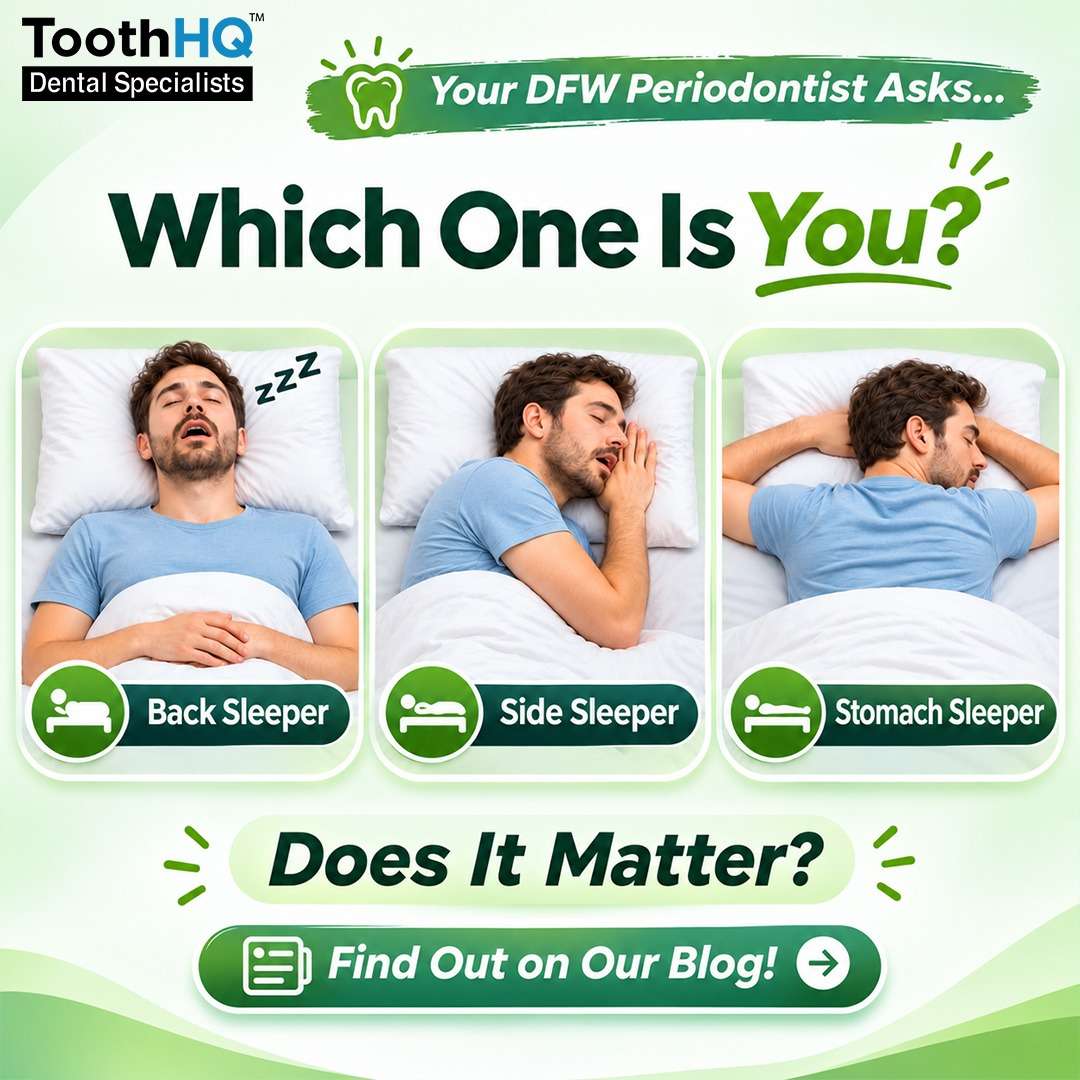
Sleep position isn’t the only factor, but it can influence how easily you breathe through your nose. Here’s a simple breakdown. Everyone is different, so treat it as a general guide.
Back sleepers
When you lie on your back, gravity can pull your tongue and soft tissues toward the back of your throat. For some people, that narrows the airway, which can lead to snoring and mouth breathing. Many people who wake with a dry mouth or a sore throat are back sleepers.
Side sleepers
Sleeping on your side tends to keep the airway more open for many people, and sleep specialists often note that snoring and breathing pauses can be less frequent in this position. The tradeoff is that side sleeping can put some pressure on your jaw, and drooling is more common.
Stomach sleepers
Stomach sleeping often means your head is turned and your jaw is pushed to one side for hours. That’s not ideal for jaw comfort, and some patients with morning jaw soreness fall into this group.
The takeaway: neither position is “right” for everyone. What matters most is whether you can breathe comfortably through your nose all night.
Mouth Breathing: The Real Troublemaker
If I had to name the single biggest factor behind a dry nighttime mouth, it’s breathing through the mouth. Common reasons include:
- Nasal congestion from allergies
- A deviated septum or other structural issues
- Sleeping on your back, where the airway can narrow
- Snoring or disrupted breathing during sleep
Mouth breathing doesn’t cause gum disease by itself, but it can make your mouth a friendlier place for plaque bacteria. For patients already dealing with gum problems, it can make things harder to control.
Snoring, Sleep Apnea, and What Your Mouth Can Tell Us
Sleep apnea is something I work with in my practice, and the mouth often offers early clues. A very dry mouth, a scalloped tongue, worn-down teeth from grinding, and persistent gum inflammation can all be signs that breathing is being disrupted during sleep. None of these proves anything on its own, but together they make me want to ask more questions.
If you snore loudly, wake up gasping, or feel exhausted despite a full night’s sleep, it’s worth having it evaluated. A formal diagnosis of sleep apnea comes from a physician, usually after a sleep study, and I work alongside your physician or sleep specialist. Once it’s diagnosed, there are treatment options that involve the mouth, and many patients are surprised to learn their dental team can be part of the solution.
Why DFW Makes Nighttime Dry Mouth Worse
North Texas has a way of drying you out, and it’s not just the summer heat:
- Air conditioning in summer and heating in winter. Running either all night pulls moisture from indoor air, and your mouth feels it.
- North Texas allergy seasons. Oak, elm, and ragweed can leave you congested, which pushes you toward mouth breathing. Commuters from Frisco, Plano, and Carrollton often tell me their worst mornings come during peak allergy weeks.
- Late nights and early starts. Whether it’s a late game in Arlington or an early shift near DFW Airport in Euless and Grapevine, short or broken sleep can make everything worse.
- Game-day habits. Tailgate drinks, salty snacks, and a few beers before bed can all dry out your mouth overnight.
- Heat and dehydration. After a 100-degree Dallas day, you may start the night already behind on fluids.
Simple Ways to Wake Up More Comfortable
You don’t have to rebuild your bedroom. A few small changes can help:
Run a humidifier
A bedroom humidifier can ease the dryness from central air, especially in summer and winter.
Drink water before bed
Sip water in the evening, and keep a glass on the nightstand. Limit alcohol close to bedtime.
Treat your congestion
If allergies are the culprit, talk with your physician about what works for you. Rinsing your nose with saline can help some people breathe more easily.
Try a different position
If you snore on your back, a side-sleeping position, or a pillow that keeps you from rolling onto your back, may help. It won’t fix everything, but it’s an easy experiment.
Don’t skip the night routine
Brush and floss before bed, even when you’re tired. A clean mouth handles dry hours better than one with a day’s worth of plaque.
Mention it at your checkup
Tell your dental team if your mouth is regularly dry at night. It’s useful information, and we can look for early signs of gum inflammation.
When Dry Mouth Shows Up as a Gum Problem
Persistent dryness combined with plaque buildup can contribute to gum inflammation. If it has progressed, you may need more than a better routine. Scaling and root planing can treat infection below the gumline, and gum grafting may be considered when recession has occurred. Catching it early keeps the options simpler.
Frequently Asked Questions
Can sleeping position cause dry mouth?
Sleep position can influence it indirectly. Back sleeping may make snoring and mouth breathing more likely for some people, and mouth breathing dries out the mouth. Nasal congestion, medications, and dehydration also play a role.
Is it bad to sleep with your mouth open?
Occasionally, no. But if it happens every night, a persistently dry mouth can make it easier for plaque and bacteria to build up, which may affect your gums and teeth.
Does dry mouth cause gum disease?
Dry mouth doesn’t cause gum disease on its own, but it can create conditions that make plaque harder to control, so it’s worth addressing.
Should I see a dentist or a doctor about snoring?
Both can help. A physician or sleep specialist can diagnose sleep apnea, often with a sleep study. ToothHQ can screen for oral signs, discuss treatment options, and coordinate with your physician so you get care that fits.
What age do you see patients at ToothHQ?
We see patients 15 and older.
Coming up next: 🦷 Chew Left or Right? What consistently chewing on one side might reveal.


