


By Dr. Kumar Vadivel, DDS, MS, MBA, FDSRCS, board-certified periodontist, ToothHQ Dental Specialists | DFW Metroplex
Quick answer: The mouth-body connection is the two-way link between oral health and overall health: bacteria and inflammation from gum disease are associated with heart disease, diabetes, and pregnancy complications. The kissing link adds that oral bacteria and some viruses can pass between partners through saliva, so treating and maintaining both mouths matters.
I’m Dr. Vadivel, a periodontist at ToothHQ Dental Specialists, and I see this connection in my chair every week. Your gums are not isolated from the rest of your body, and the bacteria behind gum disease can be shared through saliva between partners and from parents to children. Sharing bacteria does not mean you will automatically develop gum disease, but it is a good reason for couples and families to get evaluated together.
Key Takeaways
- Roughly half of U.S. adults over 30 show signs of gum disease, according to CDC estimates, and many have no pain.
- Bleeding, swollen, or receding gums are warning signs, not normal.
- Diabetes and gum disease can affect each other in both directions.
- Oral bacteria can pass between partners and family members, but your immune response, smoking, health conditions, and home care determine whether disease develops.
- Early gum disease is very treatable.
Table of Contents
- What Is the Mouth-Body Connection?
- Gum Disease 101: Gingivitis vs. Periodontitis
- Gum Disease and Your Whole-Body Health
- How Strong Is the Evidence?
- The Kissing Link: Can Gum Disease Bacteria Spread Through Saliva?
- Warning Signs You Should Not Ignore
- Why Gum Health Can Be Challenging in North Texas
- How We Diagnose Gum Disease
- Gum Disease Treatment Options Compared
- What to Expect at ToothHQ
- Protecting Your Mouth and Body at Home
- Find a ToothHQ Periodontist Near You in DFW
- Frequently Asked Questions
- Book a Consultation
What Is the Mouth-Body Connection?
The mouth-body connection is the relationship between the health of your gums, teeth, and oral bacteria and the health of your whole body. Researchers often call it the oral-systemic connection.
The mouth is the entry point to your digestive and respiratory systems, and it hosts hundreds of bacterial species. When your gums are healthy, that ecosystem stays in balance. When plaque builds up along and below the gumline, the balance shifts toward bacteria that trigger chronic inflammation.
Researchers believe two main pathways connect gum disease to the rest of the body:
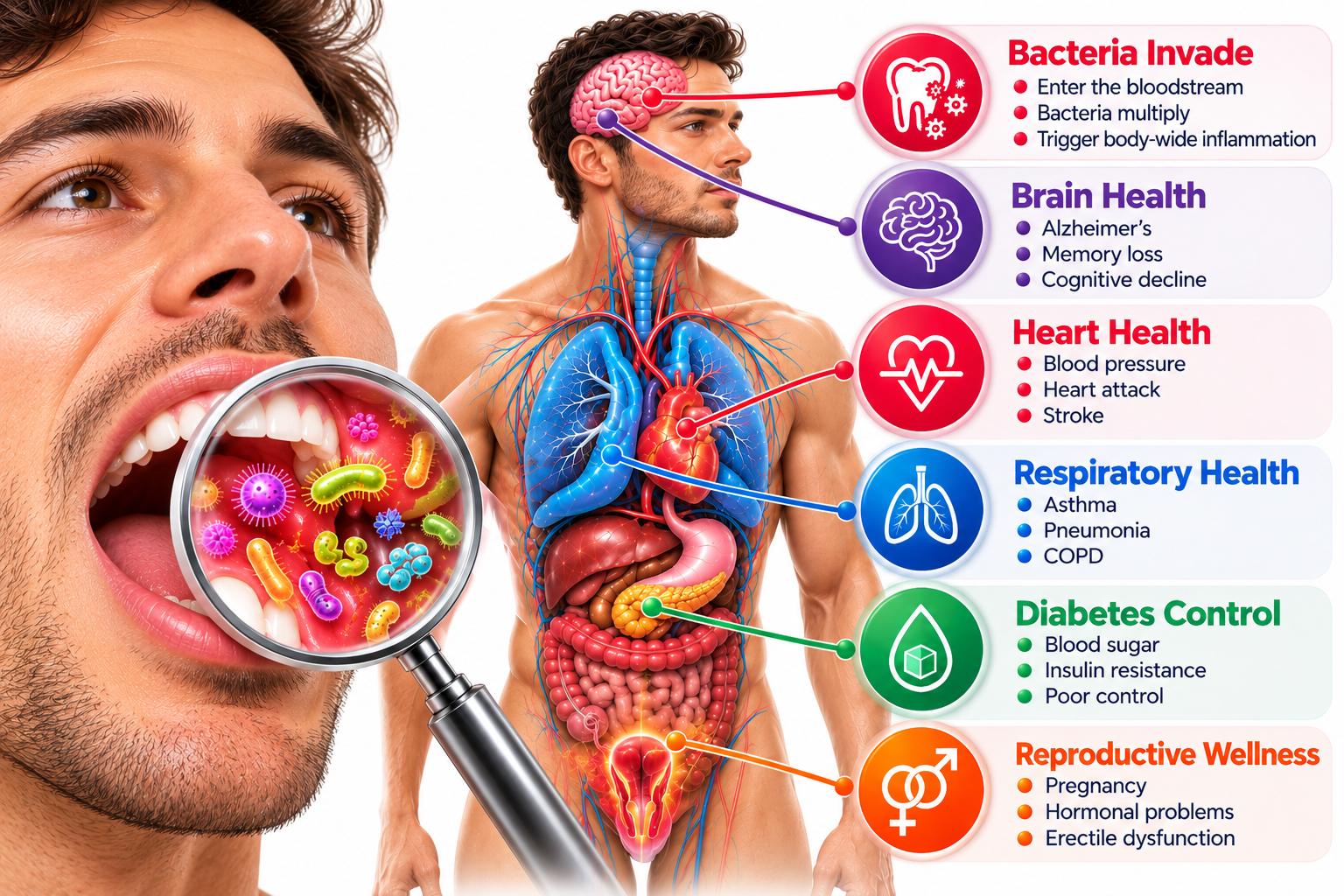
- Inflammation. Chronically inflamed gum tissue releases inflammatory chemicals into the bloodstream that may contribute to inflammation elsewhere.
- Bacteria entering circulation. Inflamed, bleeding gum tissue gives oral bacteria a route into the bloodstream, where some species have been detected in distant tissues.
Much of this research shows association, not proven cause and effect. Treating gum disease clearly benefits oral health and may support overall health, but it is not a substitute for care from your physician.
Gum Disease 101: Gingivitis vs. Periodontitis
Gingivitis is the earliest, reversible stage of gum disease. Periodontitis is the deeper stage that damages the bone supporting your teeth.
Gingivitis
Gums are red, puffy, and bleed easily when you brush or floss. It is reversible with professional cleaning and good home care.
Periodontitis
Inflammation spreads below the gumline and begins breaking down the bone and ligaments that hold teeth in place. It cannot be cured by brushing harder, but it can be treated and controlled. Advanced periodontitis can lead to gum recession, loose teeth, abscesses, and tooth loss.
Gum disease is often painless until it is advanced, which is why many patients from Frisco to Cedar Hill are surprised by their diagnosis.
Gum Disease and Your Whole-Body Health
Gum disease is associated with several systemic conditions, but “associated” does not mean “causes.”
Heart Disease and Stroke
People with gum disease have been found in many studies to have a higher likelihood of cardiovascular disease. Shared risk factors such as smoking, diabetes, and age play a role, and researchers continue to study whether gum inflammation contributes directly. Healthy gums are a worthwhile goal, and your dentist and cardiologist should know about each other’s care.
Diabetes: A Two-Way Street
Diabetes can make gum infections more severe and slower to heal, and untreated gum disease may make blood sugar harder to control. Some studies suggest treating gum disease can modestly improve blood sugar measures, though results vary. If you have diabetes or prediabetes, regular periodontal evaluations are especially important.
Pregnancy
Hormonal changes can make gums more sensitive and prone to swelling during pregnancy. Some studies have associated severe gum disease with preterm birth and low birth weight, although results vary. Cleanings and gum care are considered safe and important during pregnancy. Tell us if you are expecting.
Respiratory Health
Bacteria from the mouth can be inhaled into the lungs. Gum disease has been associated with pneumonia and worsening of chronic lung conditions, particularly in older adults and people with weakened immunity.
Memory and Cognitive Health
Some research has found gum disease bacteria in the brains of people with Alzheimer’s disease. This science is early, and a causal relationship has not been established. What we can say is that healthy gums support your ability to eat well and stay active as you age.
Rheumatoid Arthritis
Rheumatoid arthritis and gum disease share inflammatory pathways, and people with one are more likely to have the other. More research is needed to know whether treating one helps the other.
Oral Cancer and HPV
Your dental team is often the first to spot oral cancer. Tobacco, heavy alcohol use, and certain strains of HPV raise risk. Every periodontal evaluation should include a soft-tissue check, and a sore, patch, or lump that doesn’t heal within about two weeks deserves an exam.
How Strong Is the Evidence? A Comparison
| Condition | Association with gum disease | Causation proven? | What it means for you |
|---|---|---|---|
| Diabetes | Strong, two-way | Bidirectional influence supported | Treat gum disease and manage glucose together |
| Heart disease and stroke | Consistent | No | Healthy gums support, not replace, heart care |
| Pregnancy complications | Moderate | No | Keep routine care and tell your dentist you’re pregnant |
| Respiratory infection | Moderate, mainly in vulnerable groups | Plausible mechanism | Daily oral care matters, especially for older adults |
| Rheumatoid arthritis | Moderate | No | Share your medical history with your periodontist |
| Alzheimer’s disease | Emerging | No | Active research; not a reason for alarm |
| Oral cancer | Dentists play a screening role | Risk factors well established | Don’t skip soft-tissue exams |
The Kissing Link: Can Gum Disease Bacteria Spread Through Saliva?
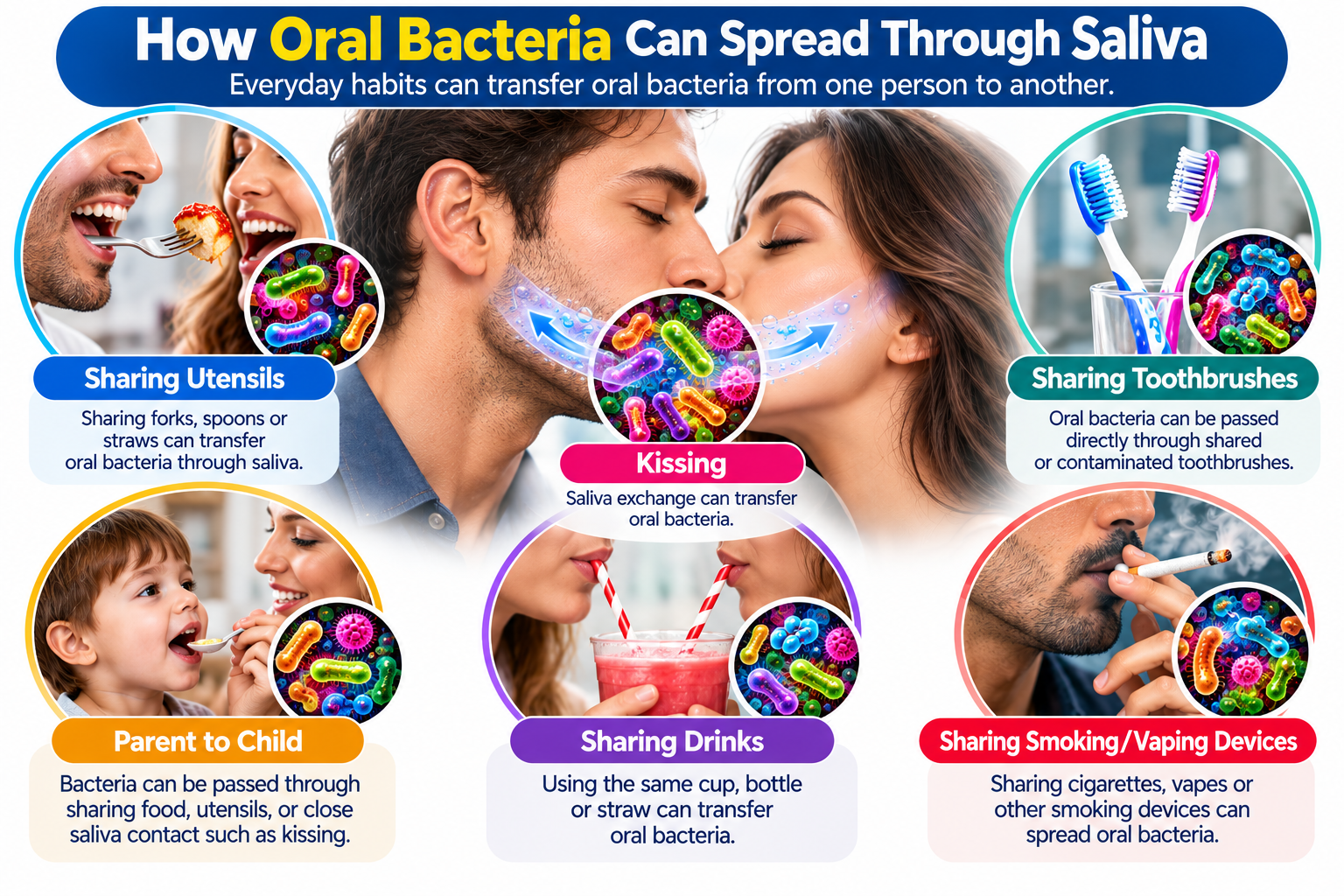
Yes, the bacteria associated with gum disease can be passed through saliva, but that is not the same as catching a disease. Kissing, sharing drinks, and sharing toothbrushes are all routes for saliva transfer.
What the Research Shows
- Studies comparing couples have found that partners can share some of the same oral bacteria, including species associated with gum disease.
- One small study found that a ten-second kiss can transfer tens of millions of bacteria.
- Parents with active gum disease can pass these bacteria to their children through shared utensils, tasting food, and close contact.
Viruses Passed Through Saliva
Bacteria are not the only thing partners share:
- Epstein-Barr virus, the cause of mononucleosis, nicknamed the “kissing disease”
- Herpes simplex virus (HSV-1), which causes cold sores
- Cytomegalovirus (CMV), common and usually mild in healthy adults
Active cold sores are the most contagious. If you have one, skip kissing until it heals.
What It Does Not Mean
- You cannot “catch” gum disease the way you catch a cold.
- Whether bacteria turn into disease depends on your host response: your immune system, genetics, smoking, diabetes, stress, dry mouth, and how well you clean your teeth.
- Having a partner with gum disease is a reason to get checked, not a reason for alarm.
What Couples and Families Can Do
- Get screened together. If one partner is diagnosed with periodontitis, the other should have a periodontal evaluation, even if they feel fine.
- Don’t share toothbrushes or store them touching each other.
- Replace your toothbrush after gum disease treatment and every three months.
- Parents: avoid cleaning a pacifier with your mouth and avoid sharing spoons with young children, especially if you have untreated gum disease.
- Treat gum disease early. Reducing the bacterial load in one mouth lowers what is available to share.
A healthy mouth is a good kisser. Daily care and early treatment protect you and the people you love.
Warning Signs You Should Not Ignore
Bleeding gums are never normal, and they are the most common early sign of gum disease. See a dentist or periodontist if you notice:
- Gums that bleed when brushing or flossing
- Red, swollen, or tender gums
- Persistent bad breath or a bad taste
- Gums pulling away from teeth (longer-looking teeth)
- Loose or shifting teeth, or changes in your bite
- Pus around teeth or gums
- New spaces developing between teeth
You do not have to wait for pain.
Why Gum Health Can Be Challenging in North Texas
Several local factors can affect gum health for DFW residents.
- Allergy seasons. Cedar fever and other North Texas allergens can lead to mouth breathing and antihistamine use, both of which can dry out the mouth. Saliva is protective, so dry mouth can raise the risk of plaque buildup and gum problems.
- Busy schedules and stress. Long commutes and demanding work weeks often mean skipped cleanings. Stress can also influence inflammation and habits like clenching and grinding.
- Hot weather and dehydration. Staying hydrated supports saliva flow.
- Sugary and acidic drinks. Sipping sweet tea, soda, and energy drinks all day increases plaque-feeding sugars.
How We Diagnose Gum Disease
A periodontal evaluation measures how deep your gum pockets are, how much bone you have, and what risk factors you carry. It typically includes:
- Measuring the depth of the spaces (“pockets”) between your gums and teeth
- Checking for gum recession, bleeding, and tooth mobility
- Dental X-rays to evaluate bone levels
- A soft-tissue screening
- Reviewing your medical history, medications, and risk factors
- Discussing a personalized treatment plan
Gum Disease Treatment Options Compared
The right treatment depends on how far gum disease has progressed. Your periodontist will recommend a plan after an exam.
| Treatment | What it does | Typical recovery | Who it’s for |
|---|---|---|---|
| Professional cleaning and improved home care | Removes plaque and tartar, reverses inflammation | Minimal | Gingivitis |
| Scaling and root planing | Deep cleaning below the gumline, done with traditional instruments or laser assistance for appropriate candidates | Mild soreness and sensitivity for a few days | Early to moderate periodontitis |
| Laser-assisted periodontal therapy (FDA-cleared LANAP® protocol) | Minimally invasive, laser-based option | Varies by case | Appropriate candidates, based on exam |
| Surgical and regenerative procedures, including gum grafting and bone grafting | Clean deeper areas, reshape tissue, or rebuild gum and bone lost to disease | Varies; discomfort managed with medication and instructions | Advanced disease or recession |
| Periodontal maintenance (usually every 3 to 4 months) | Specialized cleanings that help keep disease under control | Little to none | Anyone with a history of gum disease |
Gum disease is a chronic condition. With treatment and consistent maintenance, many patients stabilize it, but results vary and cannot be guaranteed.
What to Expect at ToothHQ Dental Specialists
Consultation
Your first free visit includes a review of your medical and dental history, including conditions like diabetes, heart disease, pregnancy, and medications. We measure pocket depths, check for bleeding and recession, take X-rays, and screen your soft tissues. I’ll explain what I find and what your options are.
Procedure
For many patients the first step is scaling and root planing, usually with local anesthetic so you stay comfortable. More advanced cases may need surgical care. We walk you through the plan before any treatment begins.
Recovery
After deep cleaning, gums may be tender and teeth sensitive for a few days. Most people return to normal activities quickly. After surgical procedures, you’ll receive written instructions on eating, cleaning, and medications, and follow-up visits let us check healing.
Cost and Insurance
Cost depends on the treatment, the areas involved, and your coverage. Many dental plans cover a portion of periodontal evaluations and treatment, and some medical plans may help when a medical condition is involved. Coverage varies by plan, so our team can help verify your benefits and provide an estimate before treatment.
Protecting Your Mouth and Body at Home
Daily plaque control is the foundation of both oral and overall health.
- Brush twice a day for two minutes with fluoride toothpaste
- Clean between teeth daily with floss, interdental brushes, or a water flosser
- Avoid tobacco in any form
- Keep diabetes and other chronic conditions well managed
- Limit sugary drinks and stay hydrated through Texas summers
- Keep up with professional cleanings and exams
- Tell your dental team about every medication and diagnosis
Find a ToothHQ Periodontist Near You in DFW
ToothHQ Dental Specialists provides periodontal and oral surgery care across the Dallas-Fort Worth Metroplex:
| Location | Areas Served | Address |
|---|---|---|
| Carrollton | Carrollton, Farmers Branch, Addison, Coppell, Hebron, North Dallas, Plano, The Colony, Lewisville, & surrounding North Dallas communities | 1500 W Hebron Pkwy #108, Carrollton, TX 75010 |
| Grapevine | Grapevine, Southlake, Colleyville, Euless, Irving, Arlington, Grand Prairie, Fort Worth, & nearby Tarrant County communities | 3801 William D Tate Ave #100, Grapevine, TX 76051 |
| Cedar Hill | Cedar Hill, DeSoto, Duncanville, Lancaster, Oak Cliff, the Best Southwest area, & Southern Dallas County | 103 Belt Line Rd # H, Cedar Hill, TX 75104 |
| Dallas (Mockingbird/SMU) | SMU, University Park, Highland Park, Lakewood, Lower Greenville, Old East Dallas, Lake Highlands, & the Greater Dallas area | 6333 E Mockingbird Ln #254, Dallas, TX 75214 |
Frequently Asked Questions
Can you get gum disease from kissing?
You cannot catch gum disease like a cold, but the bacteria associated with it can be shared through saliva. Whether those bacteria cause disease depends on your immune response, oral hygiene, and risk factors.
If my partner has gum disease, should I get checked?
Yes. We recommend that partners and household members of someone with periodontitis have a periodontal evaluation, even without symptoms.
Can parents pass gum disease bacteria to their children?
Parents can pass oral bacteria to children through shared utensils, pacifiers, and close contact. Good oral care for the whole family helps reduce risk.
Can gum disease affect my heart?
Research has found an association between periodontitis and cardiovascular disease, but scientists are still studying whether gum disease directly contributes. Talk with both your dentist and physician if you have heart concerns.
Can gum disease make diabetes harder to control?
It may. Inflammation from gum infection can affect blood sugar regulation, and high blood sugar can worsen gum disease.
Is gum disease reversible?
Gingivitis is reversible. Periodontitis cannot be fully reversed, but it can be treated and managed to stop further damage.
Does gum disease hurt, and why do my gums bleed when I floss?
Gum disease often does not hurt, especially early on. Bleeding is usually a sign of plaque-driven inflammation, so keep cleaning the area gently and schedule an evaluation rather than stopping flossing.
Is it safe to treat gum disease during pregnancy?
Gum evaluations and cleanings are generally considered safe and recommended during pregnancy. Let us know you are pregnant so we can tailor your care.
How often should I see a periodontist?
It depends on your risk. Many patients with a history of periodontitis benefit from maintenance visits every 3 to 4 months.
Does insurance cover periodontal treatment, and do I need a referral?
Many dental plans cover a portion of periodontal care, and coverage varies by plan. Many patients are referred by their general dentist, but you can schedule directly with us. Check your plan for any referral requirements.
Book a Consultation
Bleeding gums? A partner with gum disease? Don’t wait for pain. Book a complimentary periodontal evaluation at ToothHQ at the Carrollton, Grapevine, Cedar Hill, or Dallas location nearest you.


