


This question comes up almost every cleaning, usually right after I ask a patient how often they’re flossing and get a slightly guilty pause in response. More often than not, the honest answer is some version of “I use the little picks instead, does that count?” It’s a fair question, and one I think deserves a real answer rather than a reflexive “just floss properly,” because the truth is more nuanced than that.
Short version. Traditional floss, used correctly, is still the more thorough tool for most mouths. But a dental pick used consistently will outperform floss that sits in the drawer unused, and for a lot of patients, that’s really the more honest comparison to be making.
What Each One Is Actually Designed to Do
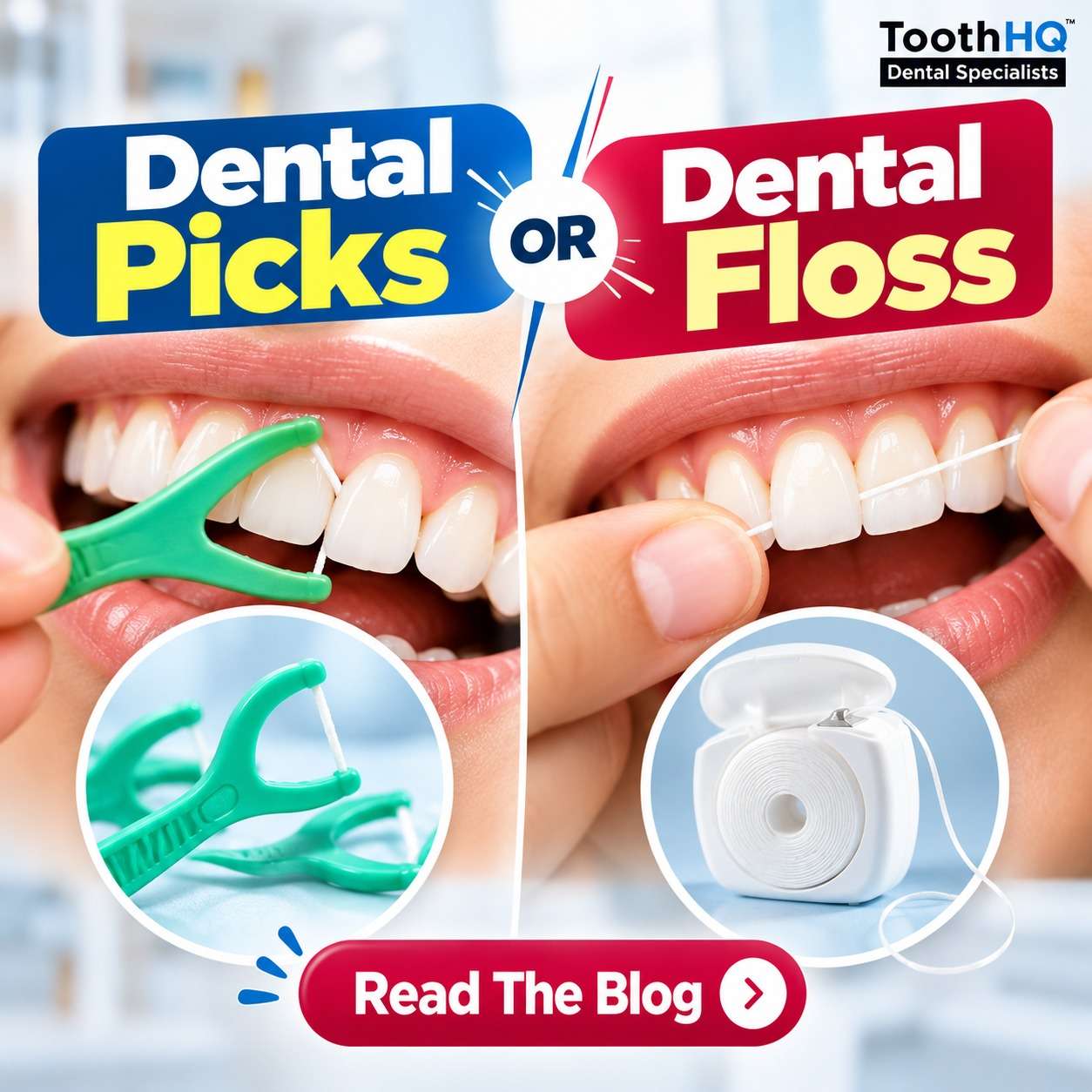
Traditional floss is a thin strand that wraps around the side of each tooth, curving slightly to follow the natural contour below the gumline. That ability to hug the shape of the tooth and reach slightly under the gum tissue is what makes it effective at removing plaque in the tightest spaces, including the areas between teeth that are touching closely.
Dental picks, sometimes called floss picks or interdental picks, use a small, rigid or semi-rigid piece of plastic, often with a short strand of floss stretched across a fork-shaped end, to get between teeth without the hand motion traditional flossing requires. They’re faster, easier to use one-handed, and far less intimidating for anyone who’s struggled with the technique of wrapping floss around their fingers.
Where Floss Genuinely Has the Edge
Floss can contour to the shape of each individual tooth as you move it up and down, which lets it reach slightly further below the gumline and hug both sides of a tight contact point more completely. This matters most in areas where teeth are closely spaced or where there’s some irregularity in tooth alignment. The rigid shape of a pick doesn’t flex the same way, which means it can miss plaque sitting right at the curve of the tooth, particularly in tighter spaces.
I’d also point out that floss gives you more control over pressure and angle, which matters for patients with any gum sensitivity or early recession, where a one-size-fits-all pick shape isn’t always forgiving.
Where Dental Picks Genuinely Win
Here’s the part that gets underweighted in most of these comparisons. The best interdental tool is the one you’ll actually use every day, and for a meaningful number of patients, that’s a pick, not floss. The ease of use translates directly into consistency, and consistency is what actually prevents plaque buildup and gum disease, far more than which specific tool technically performs better in a lab setting.
Picks are also genuinely useful for anyone with limited hand dexterity, including older patients or anyone managing arthritis, where the fine motor coordination traditional flossing requires can be a real barrier. And for wider gaps between teeth, which become more common with age or after some periodontal treatment, a pick or a similar interdental brush can actually clean more effectively than floss, since floss alone doesn’t fill a wider space well.
What the Research Actually Shows
Honestly, the clinical evidence comparing picks and floss head-to-head is less definitive than people expect, and I think that’s worth saying plainly rather than overselling either side. Some studies show modest advantages for floss in plaque removal, others show comparable results, particularly when a pick is used thoroughly and consistently. What the evidence is fairly consistent on is that any interdental cleaning, done regularly, meaningfully outperforms brushing alone, regardless of which specific tool is used.
So Which Should You Actually Use
I’d frame it less as a competition and more as a question of fit. If you’re someone who flosses consistently and has the dexterity and patience for it, traditional floss is still the slightly more thorough option, and there’s no real reason to switch. If floss has been sitting unused in a drawer because the technique feels like a hassle, a pick that you’ll genuinely use every day is a better choice than perfect floss technique you never actually get around to.
For some patients, I’ll actually recommend both, picks for quick daily use, with traditional floss used periodically for a more thorough pass, particularly in areas with tighter contact points. It’s not an either-or decision for everyone.
A Few Other Options Worth Knowing About
Beyond the two most common choices, water flossers have become a solid option for patients with braces, implants, or limited dexterity, using a stream of water to flush debris from between teeth and along the gumline. Interdental brushes, small bristled tools that look like tiny bottle brushes, work especially well for wider gaps between teeth or around dental work. None of these fully replace the others. They’re each better suited to slightly different situations, which is part of why I’d rather understand your specific mouth before recommending just one.
What I’d Actually Tell a Patient
Pick whichever tool you’ll use every single day without fail, and use it well. A pick used correctly and consistently will do more for your gum health than floss technique you only manage a couple times a week out of guilt. That said, if you’ve got tight contacts between certain teeth or any early signs of gum recession, it’s worth asking at your next visit whether traditional floss makes more sense specifically in those areas, even if you’re using a pick everywhere else.
A DFW-Specific Note
I see this question come up a lot with patients juggling long commutes and early mornings across the Metroplex, where a thirty-second pick used in the car or at a desk is realistically what happens, versus a floss routine that gets skipped when mornings run tight. I’d rather see a patient doing the thirty-second version consistently than planning on a more thorough routine that rarely actually happens.
Where This Leaves You
Floss has a slight technical edge in ideal conditions, but the tool that actually gets used every day wins in practice, regardless of which one it is. If you’re not sure which approach fits your specific mouth and gum health best, that’s a quick, worthwhile question to bring to your next cleaning.
Got a question about your own flossing routine or which tool actually makes sense for you? I’d genuinely like to hear it. Ask me directly here.


