



Have you ever looked at your gums and wondered if their colour is normal?
Most people check their teeth in the mirror. Almost nobody checks their gums. But your gums are just as important a part of your mouth, and changes in their colour or appearance shouldn’t always be brushed off.
Healthy gums can look different from person to person. Some people have light pink gums. Others naturally have brown or darker gums. What matters most is knowing what’s normal for your mouth — so you can tell when something has actually changed. A change in gum colour, especially alongside bleeding, swelling, pain, or bad breath, can be a good reason to visit a dentist.
If you’re searching for a dentist in Texas, understanding these simple warning signs can help you take better care of your smile — whether you’re in Houston, Dallas, Austin, San Antonio, Fort Worth, or anywhere else in the state.
What Colour Should Healthy Gums Be?
Healthy gums are often pink and firm. But there’s no single “correct” gum colour for everyone.
Your natural gum colour depends partly on your genetics and skin pigmentation. Some people naturally have darker patches on their gums, and that can be completely normal.
So instead of fixating on colour alone, look at the overall condition of your gums. Healthy gums should generally:
- Feel firm to the touch
- Fit closely and snugly around your teeth
- Not bleed on a regular basis
- Not feel painful or tender
- Not be noticeably swollen
- Have no pus or unusual discharge
If your gums suddenly look or feel different than usual, that’s worth paying attention to.
Red Gums: A Common Warning Sign
Red gums are one of the most common changes people notice.
Gums often turn red when they’re irritated or inflamed — and one of the most common causes is plaque buildup. Plaque is a sticky film that forms on your teeth and contains bacteria. When it isn’t removed regularly through brushing and flossing, it can irritate the gum tissue.
Along with redness, you might also notice:
- Bleeding while brushing
- Swollen gums
- Tenderness
- Bad breath
- Gums that look darker red than usual
Together, these signs can point to gum disease. The good news: gum problems caught early are usually much easier to manage. Consistent brushing, cleaning between your teeth, and regular dental visits go a long way toward protecting your gums.
Pale Gums: Should You Be Concerned?
Sometimes gums can look noticeably paler than usual.
In some cases, very pale gums are linked to low iron levels or anaemia — this is worth discussing with a doctor, especially if you’re also feeling unusually tired, weak, dizzy, or short of breath.
That said, pale gums don’t automatically mean anaemia. Your natural gum colour might simply run lighter than someone else’s. A dentist or doctor can help you figure out whether a change is just normal variation or something worth a closer look.
Dark Brown or Black Gums Can Be Completely Normal
Many people worry the first time they notice brown or dark patches on their gums.
Here’s the reassurance: dark gums are not automatically a sign of a problem. Natural pigmentation can make gums appear brown, dark brown, or nearly black, and for many people that’s simply how their gums have always looked.
What’s worth watching for is a new or changing dark area — a spot or patch that wasn’t there before, or one that’s changing shape or size. If you notice something like that, there’s no need to panic, but don’t ignore it either. A dentist can take a look and let you know whether it needs further evaluation.
Purple or Bluish Gums – Anything to Worry?
Purple or bluish gum colour can come from a few different sources.
For some people, it’s simply their natural pigmentation — nothing to worry about. For others, a colour change like this can point to irritation or another underlying issue.
If your gums suddenly change colour, or if the change comes along with swelling, pain, bleeding, or sores, it’s a good idea to make an appointment. A dentist can examine your gums directly and decide whether more evaluation is needed.
What If Your Gums Are White?
White areas in the mouth can show up for several reasons — sometimes from minor irritation, or from something as simple as accidentally biting your cheek.
But a white patch that doesn’t go away on its own — especially one that lasts more than a couple of weeks or seems to be changing — should be checked by a dentist. Avoid the urge to scrape or remove an unusual patch yourself; let a professional take a look instead.
Bleeding Gums Should Not Be Ignored
A lot of people assume bleeding while brushing is just normal. It isn’t something you should simply accept as part of your routine. Occasional bleeding can happen if you’ve just started flossing more regularly or introduced a new cleaning tool. But if your gums bleed often, that’s usually your body telling you they need some attention.
If you notice regular bleeding, talk to your dentist. Catching a small gum problem early can prevent it from turning into a bigger one.
Your Gum Health Is About More Than Colour
Here’s the most important takeaway from this whole article:
You can’t judge your gum health by colour alone. Two people can have completely different natural gum colours and both have perfectly healthy mouths. Instead of colour alone, pay attention to a fuller picture:
Colour — Has it suddenly changed?
Texture — Do your gums feel firm, or puffy and soft?
Bleeding — Do they bleed on a regular basis?
Pain — Are your gums sore or uncomfortable?
Smell — Do you notice persistent bad breath?
Position — Do your gums seem to be pulling away from your teeth?
Looking at all of these together gives you a much clearer picture of your gum health than colour alone ever could.
Can Gum Problems Affect Your Overall Health?
Your mouth doesn’t exist in isolation — it’s connected to the rest of your body.
Gum disease is an infection and inflammation of the tissue that surrounds and supports your teeth, and research has found links between gum disease and several broader health conditions. For example, people with diabetes tend to have a higher risk of gum problems, and gum disease can sometimes make blood sugar control more difficult.
That said, it’s important not to jump to conclusions. A change in gum colour by itself doesn’t mean you have a serious health condition. Your gums can offer useful clues, but only a qualified healthcare professional can properly evaluate what’s actually going on.
Smoking Can Change Your Gum Health
Smoking and tobacco use can significantly affect your mouth.
Tobacco increases the risk of gum disease and other oral health problems, and it can also change how your gums look. One important — and often overlooked — point: smoking can actually reduce gum bleeding. That doesn’t mean the gums are healthier. It can simply mask one of the earliest warning signs of gum disease, which is part of why regular dental checkups matter even more if you smoke or use tobacco.
Your Daily Habits Matter
Healthy gums aren’t only about dental visits — what you do at home every day matters just as much.
-Brush twice a day with a soft-bristled toothbrush
-Clean between your teeth daily with floss or another interdental tool
-Limit frequent sugary snacks and drinks
-Drink plenty of water and eat a balanced diet
-If you use tobacco, consider getting professional support to quit
Small habits, repeated consistently, add up to a real difference in your oral health over time.
When Should You Visit a Dentist?
Consider scheduling a dental appointment if you notice:
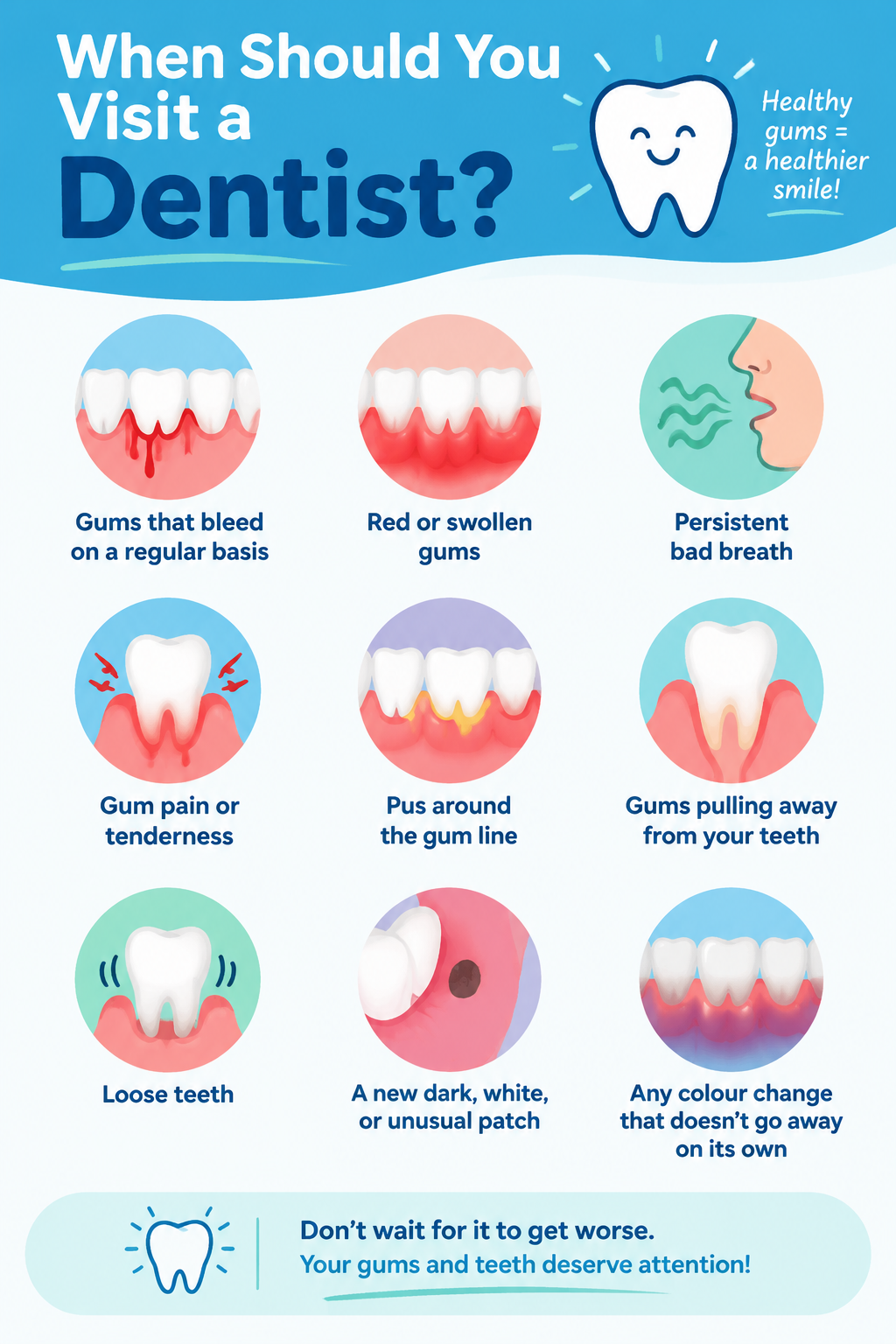
You don’t need to wait until something hurts. Regular dental visits help catch problems while they’re still small and easy to manage.
Frequently Asked Questions About Gum Colour
What is the healthiest gum colour?
Healthy gums are often pink, but they can also be naturally brown or darker. Your normal gum colour depends partly on genetics and pigmentation, so there’s no single “correct” shade for everyone.
Are dark gums unhealthy?
Not necessarily. Dark gums can be completely normal for many people. That said, a new dark spot or a sudden colour change is worth having a dentist check.
Why are my gums red?
Red gums can result from irritation, plaque buildup, or gum disease. If the redness sticks around or comes with bleeding or swelling, it’s time to see a dentist.
Why do my gums bleed when I brush?
Bleeding gums are often a sign of gum inflammation. If it happens regularly rather than as a one-off, it’s worth making a dental appointment instead of ignoring it.
Can gum colour show a health problem?
Sometimes, yes — changes in the mouth can be connected to broader health conditions. But gum colour alone can’t diagnose anything. A dentist or doctor needs to look at the complete picture.
Your gums may not get the same attention as your teeth, but they’re just as important a part of your oral health. The goal isn’t chasing a specific gum colour — it’s noticing changes.
If your gums are naturally dark, that may be perfectly normal for you. But if they suddenly turn red, swollen, painful, or develop a new unusual patch, it’s worth getting them checked.
Good gum care really comes down to the basics: brush twice a day, clean between your teeth, avoid tobacco, eat well, and see your dentist regularly. Your gums can give you real, useful clues about your health. Learn to notice them, and you may catch a problem long before it becomes a bigger one


