Scaling and Root Planing (SRP), also known as deep teeth cleaning or deep gum cleaning, is an effective treatment for periodontal disease. It involves scaling to remove plaque and tartar from the teeth and below the gumline, followed by root planing to smooth the tooth roots and remove remaining bacteria. For more advanced cases, laser deep cleaning may be used, offering a more precise removal of plaque and tartar with faster healing and reduced discomfort. Both methods help restore gum health, prevent further damage, and promote long-term oral wellness.
Scaling and root planing (SRP), commonly known as dental deep cleaning, is a highly effective non-surgical procedure used to treat early to advanced periodontal disease. This procedure goes beyond regular cleaning to target areas beneath the gum line, removing plaque buildup and promoting gum healing. Also referred to as deep teeth cleaning or deep gum cleaning, SRP is a key method for addressing periodontal disease at various stages.
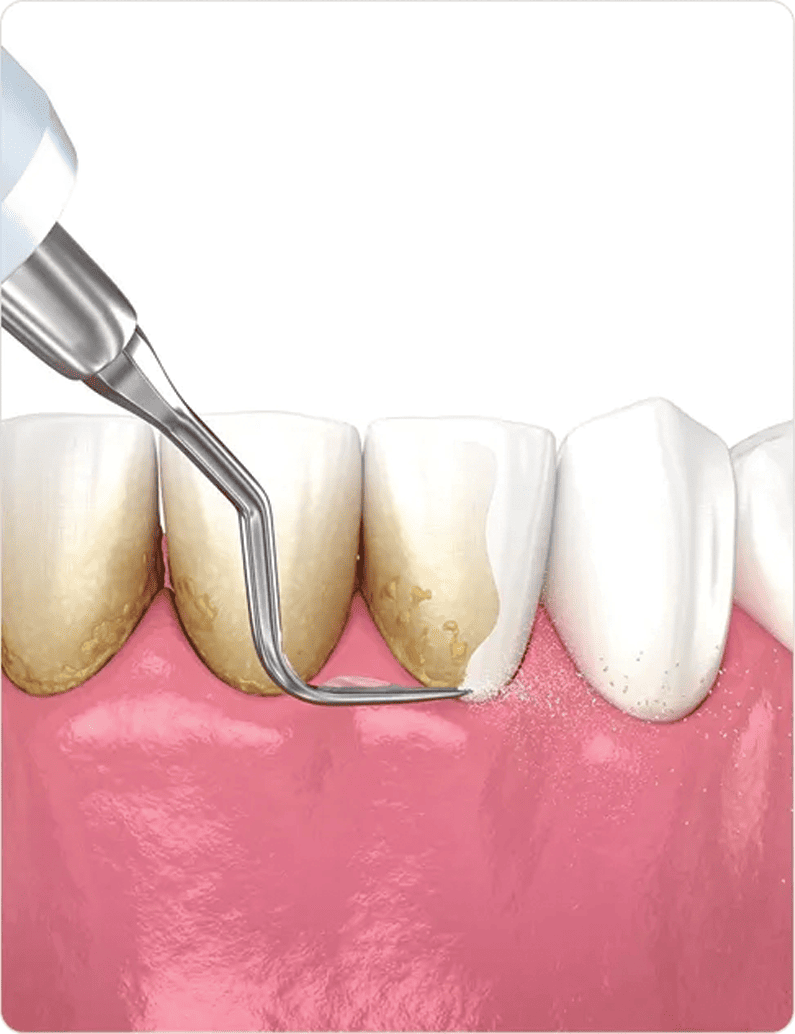
Scaling involves the removal of tartar that has accumulated on your teeth and beneath the gum line, while root planing smooths the root surfaces, removing bacteria-laden tartar from below the root line. Over time, plaque on your teeth can harden into tartar, which can only be removed by a skilled periodontist. Unlike plaque, which can be cleaned off through regular brushing, tartar requires professional intervention.
In some cases, laser deep teeth cleaning may be recommended as an advanced alternative to traditional SRP. This minimally invasive treatment uses a laser to remove plaque and tartar more effectively, providing faster healing and greater precision in treating deeper pockets beneath the gum line. Regular appointments for deep teeth and gum cleaning, including SRP and laser dental deep cleaning, are essential to prevent the progression of gum disease and protect your oral health.
Our board-certified specialists are dedicated to providing exceptional dental care

Board-certified periodontist with
extensive experience in advanced dental procedures and laser treatments.

Highly skilled specialist committed to delivering personalized care and exceptional results for every patient.

Dedicated dental specialist focused on providing compassionate care and advanced treatment solutions.
Do I Require a Dental Deep Cleaning for My Gums?
Dental Deep cleaning, also known as scaling and root planing, becomes necessary when bacteria accumulate to the point where at-home cleaning and routine dental visits cannot remove them. If left untreated, this buildup can worsen gum disease and negatively affect your oral health. Attempting a regular cleaning when a dental deep cleaning is required can be counterproductive, as it may disturb the bacteria beneath your gum line and release harmful bacteria into your bloodstream, leading to further complications.

Extensive plaque and tartar buildup on teeth and gums

4-5 millimeter pockets of bacteria between your teeth and gums

Other signs of gum disease, such as bleeding, swollen gums, or badbreath
In some cases, laser deep gum cleaning may be recommended as an advanced alternative to traditional scaling and root planing. This minimally invasive treatment uses a laser to remove plaque and tartar more effectively, offering precise cleaning in deep gum pockets while promoting faster healing.
Additionally, if you have a history of gum disease, scaling and root planing—whether traditional or laser-assisted—may be used as a preventive measure in place of routine cleanings. This procedure helps ensure your gums remain healthy
and free from infection, promoting long-term oral health.
Regular dental visits not only improve your oral health but also boost your overall well-being and enhance your confidence with a bright, healthy smile.
What to expect from a Deep Teeth Cleaning procedure?
To determine if scaling and root planing is the right treatment for you, schedule an initial free dental consultation with
us. During this visit, we will evaluate your teeth and gums, review your medical history, and recommend the best
treatment options.
If scaling and root planing is recommended, the procedure begins with an anesthetic to ensure comfort. The type of
anesthesia used will depend on the severity of your gum disease. The process includes:

We remove tartar and plaque from the crown and root surfaces, sometimes using an antimicrobial agent beneath the gums to reduce harmful bacteria.

We smooth the rough surfaces of your tooth roots to prevent plaque and bacteria from reattaching, allowing your gums time to heal.
In some cases, laser deep cleaning may be recommended as an advanced alternative to traditional scaling and root
planing. Using laser technology, we can more precisely target and remove plaque and tartar from deep pockets
beneath the gum line, offering enhanced results with less discomfort and faster healing.
After the procedure, a follow-up appointment will assess your gum health and check the progress of your treatment.
Depending on your needs, scaling and root planing—whether traditional or laser-assisted—may require one or more
visits for optimal results. Some mild soreness or gum sensitivity may occur after the procedure, but it typically
resolves within a few hours.
What are the post-op instructions for Dental Deep cleaning?

Expect mild soreness or sensitivity for a few hours. Over-the-counter pain relievers can help.

For 24-48 hours, avoid hot or cold foods to prevent irritation.

Use a soft-bristled toothbrush and be gentle around treated areas.

Rinse with an antimicrobial mouthwash to reduce infection risk.

Stick to soft foods for the first few days.

Attend follow-up visits to assess healing and progress.
By following these instructions, you'll support your gum health and healing process. Contact us if you have concerns.
How much does Deep Gum Cleaning typically cost?
The cost of scaling and root planing (SRP) can vary depending on several factors, including the severity of your gum
disease, the extent of treatment needed, and your dental insurance plan. For some patients, laser deep cleaning may
be recommended as an advanced alternative to traditional SRP, which can affect the overall cost due to the
technology used and the precision it offers in treating deeper gum pockets.
At ToothHQ, our team is here to assist you with all necessary paperwork, scheduling appointments, and addressing
any billing-related questions.
We are committed to providing affordable, high-quality dental care to help you maintain optimal oral health.
At ToothHQ Dental Specialists, diagnosing gum disease involves a thorough evaluation by our experienced periodontists, who will measure the spaces between your teeth and gums. If your gum pockets exceed the average depth of three millimeters, you may be at risk for gum disease and could require treatment. Based on the severity of your condition, our periodontists will recommend a follow-up appointment, where a variety of personalized treatment options will be discussed to restore your gum health. We are committed to providing effective, tailored solutions for patients across the DFW metroplex, ensuring optimal oral health for you and your family.
Scaling and Root Planing, often referred to as deep teeth and gum cleaning, is an effective treatment for periodontal disease. Scaling involves the removal of tartar buildup on the teeth and below the gumline, while root planing targets tartar beneath the root surface. When bacteria remain on your teeth for an extended period, it can harden into tartar, which can’t be removed by regular brushing. Unlike plaque, which can be cleared with standard brushing, tartar requires professional intervention from a periodontist.
LAPIP is an FDA-approved laser treatment for peri-implantitis, a gum infection around dental implants. It effectively removes bacteria, heals gums, and prevents further damage to implants, all with minimal discomfort and faster recovery.
Gum recession happens when the gum tissue pulls back from the teeth, exposing more of the tooth or its root. This can lead to increased sensitivity, a higher risk of cavities, and an altered smile. Causes include poor oral hygiene, aggressive brushing, genetic factors, hormonal changes, and gum disease
A gummy smile occurs when there is an uneven proportion between the visible gums and teeth. This condition can result from several factors, including bone loss, periodontal disease, or genetic tendencies. Many patients feel self-conscious about the appearance of a gummy smile and choose to address it through a gum contouring procedure, which helps create a more balanced and aesthetically pleasing smile.
If you’re experiencing gum recession, a gum graft might be a beneficial option. This common oral surgical procedure helps to thicken the existing gums and cover exposed tooth roots to prevent further recession. While gum recession can occur for various reasons, periodontal disease is one of the most common causes. A gum graft not only enhances the appearance of your smile but also lowers the risk of developing additional dental problems in the future.
Laser gum surgery is an innovative and effective treatment for gum disease that uses precise laser technology to target and eliminate harmful bacteria, all while preserving the surrounding gum tissue. Unlike traditional treatments that require cutting and suturing, laser gum surgery offers a minimally invasive approach that significantly reduces recovery time. Patients experience a faster healing process with less discomfort, making it an ideal option for those seeking a gentle yet highly effective solution to gum disease.
Laser gum therapy is generally used to treat mild to moderate gum disease, such as early-stage gingivitis or moderate periodontal disease. Unlike laser gum surgery, which is designed for advanced gum disease requiring deeper tissue removal and repair, laser gum therapy is effective for treating gum recession, removing plaque and tartar, and reducing inflammation—all without the need for incisions. This non-invasive, gentle procedure is ideal for patients seeking a quick recovery with minimal discomfort.
Advanced Laser Cleaning is typically used for moderate to severe gum disease, where a less invasive treatment is needed to remove plaque, tartar, and infected tissue from beneath the gumline. This procedure is ideal for patients looking for a gentle, effective way to treat gum infection.
Bone grafting or augmentation is often necessary for patients who have experienced significant bone loss in the jaw. This procedure involves adding bone material to the jaw to create a stronger foundation for dental implants.
At ToothHQ Dental Specialists, we prioritize your health, confidence, and smile. Regular visits to maintain your teeth and gums not only improve your oral health but also boost your overall well-being and self- esteem. We understand the value of your time, which is why we are committed to making each visit as efficient as possible.
If you’re interested in learning more about our dental services, book your free consultation today with
ToothHQ Dental Specialists. Our friendly and knowledgeable staff is ready to assist you.
ToothHQ Dental Specialists
ToothHQ Dental Specialists 1500 W Hebron Pkwy Suite 108 Carrollton, Texas, 75010
ToothHQ Dental Specialists 3801 William D Tate Ave # 100 Grapevine, Texas, 76051
ToothHQ Dental Specialists 103 Belt Line Rd # H Cedar Hill, Texas, 75104
ToothHQ Dental Specialists 6333 E Mockingbird Ln # 254 Dallas, Texas, 75214
Scaling and root planing is a deep cleaning procedure that removes plaque and tartar from below the gumline and smoothes root surfaces to help gums reattach.
It’s typically required when gum pockets deepen, gums bleed, or standard cleanings are no longer effective—indicating moderate to advanced periodontitis.
Sessions can take 45–90 minutes, sometimes split across appointments, depending on the extent of gum pocket depth and treatment areas.
Most patients have local anesthesia for comfort. Mild soreness or sensitivity may last a few days afterward, but the procedure itself is well tolerated.
Recovery varies but often occurs within a few days to a week. Gums begin healing immediately, and following care instructions supports faster recovery.
It reduces gum pocket depth, controls infection, helps prevent tooth loss, and promotes overall oral health by removing harmful bacteria.
It can halt the progression of gum disease and promote healing, but existing bone or tissue loss may not fully reverse; ongoing care is critical.
After the initial treatment, follow‑ups may be needed every 3–4 months to maintain results if you have ongoing gum disease risk factors.
At ToothHQ, Dallas Fort Worth Metroplex our skilled periodontal specialists perform scaling and root planing using the latest technology and advanced techniques. We provide personalized care to help restore and maintain your gum health, ensuring long-term oral wellness.
Many dental insurance plans cover deep cleaning procedures when medically necessary due to gum disease, but coverage varies—check with your provider ahead of time


